What Homeowners Should Expect From a Fall Furnace Tune-Up
New to the area or unsure if your furnace is ready for winter? Learn what a real fall furnace tune-up includes and why it matters for safety and efficiency.
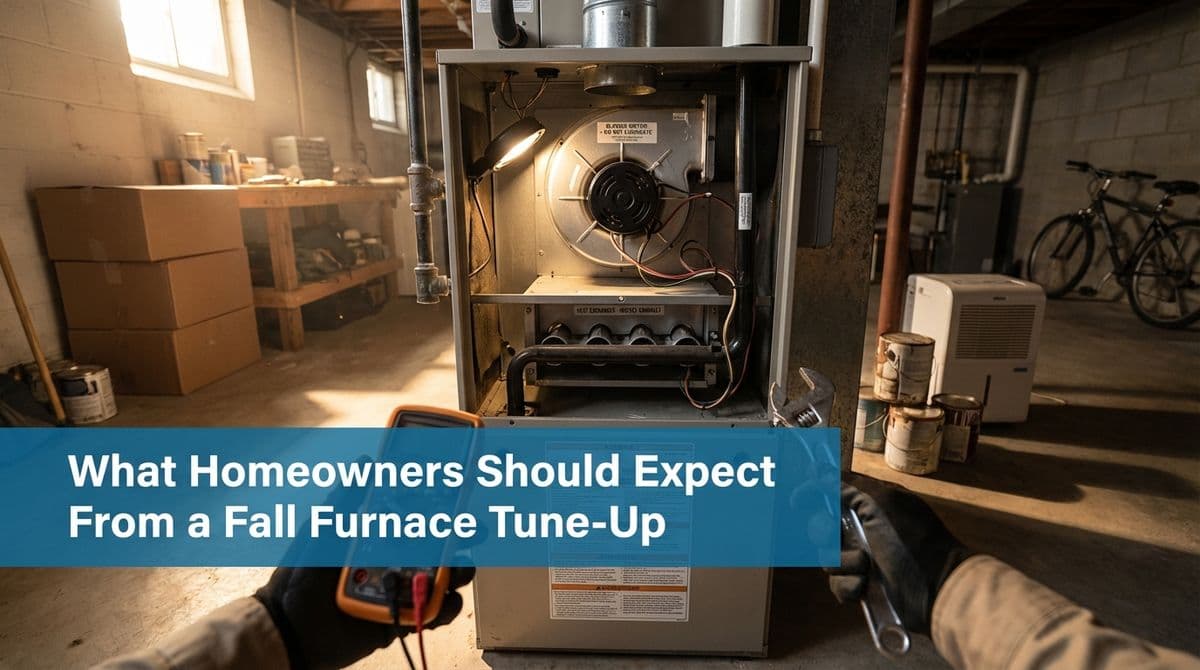
We recently got a call from a homeowner — let’s call her Debra — who had just moved to our area and was getting ready for her first winter here. She asked, a little hesitantly, if we could “do like a checkup on a furnace for the winter.”
Her husband had sent her on a mission to find someone local, and she had all the questions we hear every fall:
- “Is this just an hourly charge or a flat price?”
- “What exactly do you test?”
- “Are you licensed and insured?”
- “Is this really necessary if the furnace seems to be working?”
We walked her through what we do on a fall furnace tune-up, why we check for things like carbon monoxide, and how a simple visit now can prevent a no-heat emergency later. If you’re like Debra and wondering what to expect, this post is for you.
What a Fall Furnace Tune-Up Actually Includes
On the phone, Debra said, “I just want to make sure the unit’s running good.” That’s exactly the point of a tune-up — but we go much deeper than a quick look and a filter swap.
Here’s what a professional fall furnace tune-up typically includes when we come to your home:
- Safety inspection of the heat exchanger, burners, and venting
- Carbon monoxide (CO) testing at the furnace and in the surrounding area
- Gas pressure and combustion check (for gas furnaces)
- Electrical inspection of wiring, connections, and controls
- Thermostat check and calibration
- Blower motor and fan inspection and cleaning as needed
- Filter check and replacement if needed (or installed if you provide one)
- Startup and shutdown cycle test to make sure the system operates smoothly
In Debra’s words, the goal is “just to make sure the unit’s running right.” But behind the scenes, we’re using instruments and experience to spot small issues before they become big problems.
Why Carbon Monoxide Testing Matters So Much
During our call, Debra’s ears perked up when we mentioned, “We do a CO — carbon monoxide — test.” That’s usually the moment people realize this visit isn’t just about comfort; it’s about safety.
Carbon monoxide is colorless, odorless, and dangerous. A cracked heat exchanger, a blocked vent, or improper combustion can all cause CO to leak into your home. You might not notice anything until symptoms hit — headaches, dizziness, nausea — and by then it can already be serious.
During a tune-up, we:
- Visually inspect the heat exchanger for cracks or hotspots
- Check that the flue and venting are open, clear, and properly sized
- Use a meter or analyzer to test for CO around the furnace and sometimes in the living space
This step gives homeowners peace of mind that their system isn’t just working — it’s working safely.
How a Tune-Up Boosts Efficiency and Lowers Bills
Debra’s furnace seemed to be running fine, but like most homeowners, she didn’t know if it was running efficiently. That’s where regular maintenance pays off.
A properly tuned furnace can:
- Use less gas or electricity for the same amount of heat
- Heat more evenly so you don’t have cold spots in certain rooms
- Reduce wear and tear on motors, igniters, and controls
Simple things like cleaning burners, tightening electrical connections, and ensuring the blower is running at the correct speed can make a noticeable difference in both comfort and utility bills.
What You Should Expect From Your HVAC Company
Debra also asked us a question we love to hear: “You’re licensed and bonded, correct?” As someone new to the area, she wanted to be sure she was dealing with a legitimate, insured company.
When you schedule a fall furnace tune-up, here are a few things you should expect from whoever you hire:
- Proper licensing and insurance – Always ask, and don’t be shy about it.
- Clear pricing up front – Like Debra, you shouldn’t have to wonder if you’re paying an hourly rate or a flat tune-up price.
- Owner or technician identification – It’s reasonable to ask, “Who am I speaking with?” or “Who will be coming to my home?”
- A real inspection, not a 5-minute glance – A proper tune-up usually takes at least 30–60 minutes.
If a company can’t answer those basic questions clearly, that’s a red flag.
When to Schedule and How to Prepare
When Debra called, we were already booking into the following week — that’s typical in the fall. The earlier you call before cold weather really settles in, the better your chances of getting the day and time you want.
To make your appointment go smoothly, you can:
- Clear a path around the furnace and to the thermostat
- Replace or have a new filter ready if you prefer a specific brand or type
- Make a list of any odd noises, smells, or issues you’ve noticed
- Know your system – gas or electric, approximate age, and any past problems
That way, your technician can focus on the system instead of moving boxes or hunting for the furnace.
Is a Fall Tune-Up Really Worth It?
The short answer we gave Debra: yes. For less than the cost of a surprise repair or a sky-high gas bill, you get:
- A safer system checked for carbon monoxide and fire risks
- A more efficient furnace that can help lower bills
- A better chance of avoiding a no-heat emergency on the coldest day of the year
- Professional eyes on your system if you’re new to the home or area
If you’re heading into fall wondering whether your furnace is ready for winter, you’re asking the right question — just like Debra did. A proper tune-up doesn’t just “make sure the unit’s running good.” It helps keep your family safe, comfortable, and prepared for whatever the season throws at us.