Old Gas Furnace Won’t Turn On After You Move In: Start Here
Moved into a home with an old gas furnace that won’t start? Here’s what to safely check yourself before calling an HVAC technician.
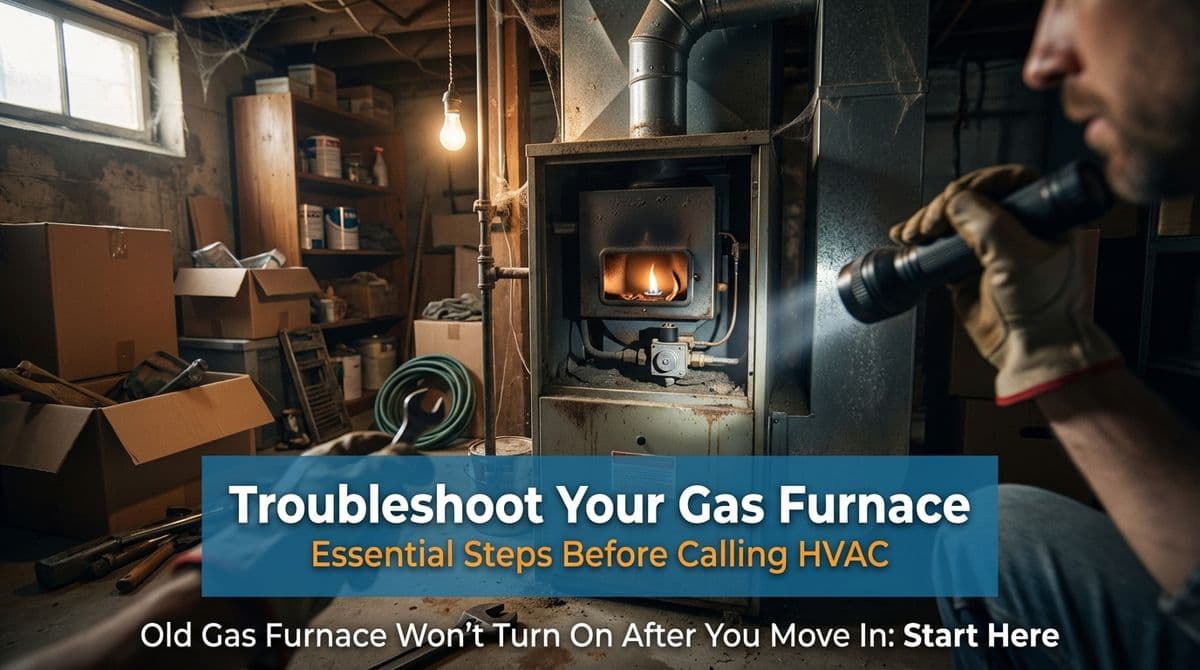
New House, Old Furnace: Why Won’t This Thing Turn On?
We recently got a call from a new homeowner — let’s call him Mark — who had just moved into an older home with what he described as “a 30-plus-year-old monster of a gas heater.” The weather finally turned chilly, he turned the thermostat to heat… and nothing. No warm air, no burner noise, no click — just a cold house and a lot of guessing.
Mark told us he’d checked the gas “as best as he could,” saw a gas valve on the furnace, and noticed there was no standing pilot light like the ones he remembered growing up. Instead, there was an ignition button that didn’t seem to do anything when he pressed it. That’s when he decided it was time to call an HVAC tech.
Situations like this are very common when someone moves into an older home, especially with a furnace that may not match what they’re used to. Before you schedule a service call, there are a few safe, homeowner-friendly checks you can make that might save you time and money.
Safety First: When You Should Not Troubleshoot
Before we talk about what to check, here’s when you should skip the DIY and call a pro immediately:
- Smell gas (rotten egg smell) near the furnace or gas meter.
- Hear a hissing sound from gas piping or the furnace cabinet.
- See burn marks, melted wires, or scorch marks inside or around the unit.
- Feel lightheaded, nauseous, or have headaches when the furnace tries to run (possible carbon monoxide issue).
If any of those apply, do not try to light anything or reset anything. Leave the area, turn off gas at the main shutoff if you know how, and call your gas company and an HVAC professional.
Step 1: Start with the Thermostat
On Mark’s call, the main concern was gas and pilot lights, but we always start with the easy stuff first — you’d be surprised how often the problem is at the thermostat.
- Set the thermostat to “Heat.” It sounds basic, but newer thermostats can be confusing, especially if the previous owner left odd settings.
- Raise the set temperature at least 5 degrees above room temperature.
- Listen for a click from the thermostat or furnace when you change the setting.
- If it’s a battery thermostat, replace the batteries even if the display looks fine.
If the thermostat won’t power up, doesn’t click, or seems unresponsive, you may have a control or power issue before the furnace ever gets the signal to turn on.
Step 2: Check the Power to the Furnace
Old gas furnaces still need electricity for the blower motor and ignition system. In Mark’s case, he was focused on gas flow, but if there’s no power, that ignition button will never do anything.
- Look for a light switch near the furnace that controls its power. It’s often on the side of the unit or on a nearby wall and can easily be mistaken for a regular light switch.
- Make sure it’s in the ON position.
- Check your electrical panel for a tripped breaker labeled “furnace,” “HVAC,” or “blower.” Flip it fully OFF, then back ON.
If the breaker trips again immediately, don’t force it — that indicates an electrical issue that needs a technician.
Step 3: Verify the Furnace Switches and Panels
Most older furnaces include built-in safety switches that must be satisfied before they’ll turn on:
- Make sure the blower door / front panel is properly in place. Many units have a door switch that cuts power if the panel is off.
- Look for any obvious service switches on or near the unit and confirm they’re on.
If you recently moved in, it’s not uncommon for an inspector, previous owner, or contractor to remove a panel and forget to latch it back properly.
Step 4: Gas Supply and Furnace Gas Valve
Like Mark, a lot of new homeowners worry there’s a “hidden shutoff valve” somewhere. There are usually two to check:
Main gas shutoff (house or meter)
Typically located near your gas meter or where the gas line enters the house. If the handle is:
- Parallel (in line) with the pipe – generally means ON.
- Perpendicular (crosswise) to the pipe – generally means OFF.
Furnace gas shutoff
On or near the gas pipe entering the furnace, you’ll usually see a small valve with a handle or flat tab.
- Again, parallel with the pipe is usually ON; perpendicular is OFF.
- Do not loosen any fittings or try to “adjust” anything other than that handle.
In Mark’s situation, he thought the valve “was going the right way” but wasn’t sure. That’s completely understandable on an older system with paint or rust on the pipe. If you’re not confident, it’s safer to call than to guess.
Step 5: Pilot Light vs. Electronic Ignition
Mark mentioned he grew up with a furnace where you “just stick a match in there and light it yourself,” but couldn’t even figure out where to do that on his new-old unit. That’s often because many 20–30+ year-old furnaces use electronic ignition instead of a standing pilot.
Standing pilot (older style)
- Small flame that burns all the time.
- Usually has a clearly-marked “Pilot” and “On/Off” gas control knob.
- May require manual relighting following specific instructions on the furnace label.
Electronic ignition (more modern for that age)
- No constant flame; a spark ignitor or hot surface ignitor lights the burners when there’s a call for heat.
- Often paired with an “ignition” button or reset sequence.
- Do not try to stick a match inside to light it — you can damage components or create a safety hazard.
If you’re not seeing a little always-on flame, you likely have electronic ignition. If the ignition button doesn’t do anything and you’ve already confirmed power and gas, it’s time for a professional diagnosis.
Step 6: Filter and Airflow Checks
While a dirty filter won’t usually stop an older furnace from turning on completely, it can cause it to overheat and shut down shortly after starting.
- Locate the furnace filter (usually in a slot on the side, bottom, or return duct).
- Pull it out and check if it’s clogged with dust or looks collapsed.
- Replace with the same size and similar MERV rating if it’s dirty.
If you hear the furnace start but it shuts off quickly, restricted airflow is one possible cause.
When to Stop and Call an HVAC Technician
With Mark’s system, we scheduled a visit because:
- The furnace was 30+ years old.
- He had already checked the basics but wasn’t sure about the gas valve direction.
- The ignition button did nothing, suggesting a control or ignition problem.
That combination tells us it’s beyond a quick homeowner fix. Once we’re on site, we can safely:
- Test gas pressures and verify all shutoff valves.
- Inspect and test the ignition system, flame sensor, and controls.
- Check the heat exchanger and venting for safety.
- Advise whether the old “beast” is worth repairing or should be replaced.
Moving into a Home with an Old Gas Furnace? Here’s Our Advice
If you’ve just moved into a house with an older gas furnace and it won’t turn on, run through these safe checks:
- Thermostat on HEAT and set above room temp; fresh batteries if needed.
- Confirm furnace power switch and breaker are ON.
- Make sure access panels are properly in place.
- Visually verify gas shutoff handles are in the ON position (parallel with the pipe).
- Look (don’t reach) for a pilot light label or ignition instructions inside the door.
If it still won’t fire, or you’re unsure about any of those steps, that’s exactly when to bring in a pro. We’re happy to come out, get your heat running safely, and give you an honest opinion on the condition of that old furnace so you know what to expect in the coming winters.
And unlike Mark’s experience of trying to guess at valves and buttons, you’ll have clear answers — and a warm house.