Furnace Humming but Still Heating? What It Means
Furnace humming but still heating? Learn what’s normal, common causes of loud humming, simple checks you can do, and when it’s time to call a professional.
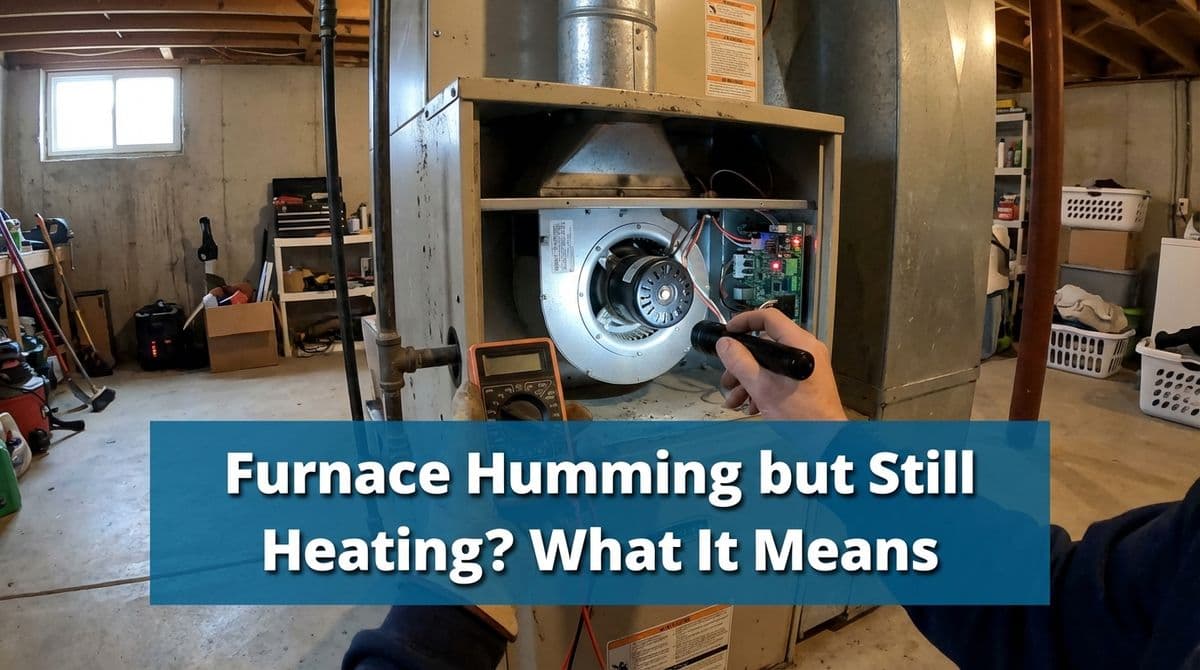
My Furnace Is Humming but Still Heating
We recently got a call from a homeowner — let’s call her Linda — who’d been referred to us by her daughter. Linda told us, “My heater is working and cycling on and off like normal, but there’s this obnoxious hum that I don’t think is supposed to be there.”
She hoped it was “just an adjustment,” but she also knew enough to say she wanted to “leave that to somebody who knows what they’re talking about and doing.” That’s exactly the right instinct when a furnace noise changes, even if the heat is still working.
If you’re in the same boat — furnace humming loudly, house still warm — we’ll walk you through what might be going on, what’s probably normal, what’s not, and when it’s time to bring in a pro.
Normal Furnace Hums vs. Concerning Noises
First, it helps to separate normal operating sounds from noises that deserve attention. Every forced-air furnace is going to make some level of hum when it runs.
Generally, we tell homeowners to think of it this way: a quiet, steady background hum that you almost tune out is usually normal. A hum that’s new, louder than usual, or annoying from other rooms is worth checking.
Here are a few sounds that are typically normal:
- Soft hum when the blower fan is running
- Gentle whoosh of air from the vents
- Brief click when the furnace starts or stops
And here are signs your hum may not be “just normal” anymore:
- The hum is noticeably louder than it used to be
- You can hear it through closed doors or across the house
- The hum changes pitch, vibrates, or is paired with rattling
- The noise continues after the furnace has shut down
Common Causes of a Loud Humming Furnace
When we visit a home like Linda’s for a humming noise, we usually start with a few usual suspects. A furnace that’s still heating but humming loudly often has one of these issues:
1. Blower Motor Starting to Fail
The blower motor is the fan that pushes warm air through your ducts. As the motor ages, internal components can wear out, causing it to draw more power and hum or buzz more loudly.
Signs this might be the culprit:
- Humming starts as soon as the blower fan kicks on
- The noise rises and falls with fan speed
- You may smell a faint hot or “electrical” odor
A blower motor in this condition often keeps working for a while, but running it too long can lead to sudden failure — usually on the coldest day of the year.
2. Failing or Stuck Blower Capacitor
Many furnaces use a capacitor to give the blower motor a jolt of energy to start. When that capacitor gets weak, the motor can struggle to start and emit a hum or buzz as it fights to spin up.
With capacitor issues, we sometimes see:
- The blower tries to start, hums, then finally spins up
- Intermittent operation — some cycles sound normal, some hum
- Occasional need to reset power to get things going again
Capacitors are relatively inexpensive parts, but they store electricity and can give a nasty shock if handled wrong, so this is one homeowners should not DIY.
3. Loose Panels or Ductwork Vibrating
Sometimes the hum isn’t an electrical component at all — it’s vibration. A furnace panel that’s not screwed down tightly, or a duct that’s slightly loose, can buzz against framing when the blower is running.
This sort of hum often:
- Changes if you gently press on the furnace cabinet
- Gets louder when the blower is at full speed
- Sounds more like a “buzz” or “rattle” than a pure hum
We can usually correct this with adjustments, fresh screws, or vibration pads.
4. Transformer or Electrical Component Noise
Furnaces have transformers and control boards that can emit a low hum during normal operation. Over time, if something loosens internally or there’s a wiring issue, that hum can become louder or harsher.
If the hum seems to come from a small box or the control area rather than the blower, we’ll test the electrical components to make sure everything is safe and properly grounded.
Simple Checks You Can Safely Do Yourself
While Linda knew she wanted a professional to diagnose the root cause, there are a couple of basic checks we often walk homeowners through over the phone before we arrive:
- Change or inspect the air filter. A severely clogged filter can make the blower work harder and hum louder. If it’s dirty, replace it and see if the noise improves on the next cycle.
- Make sure supply and return vents are open. Closed or blocked vents increase system pressure and noise.
- Listen carefully to locate the source. Is the hum strongest right at the furnace, at the ducts, or at a particular vent? That helps us narrow things down quickly.
If the hum is loud, new, or makes you nervous, turn the furnace off and wait for a technician, especially if you smell burning, see flickering lights, or notice the furnace struggling to start.
Is It Safe to Run a Humming Furnace?
This is one of the first questions we get: “It’s still heating — is it okay to keep using it?” The honest answer is, it depends what’s causing the hum.
In many cases, a mild hum isn’t an immediate emergency, but it is a signal that something is wearing out or out of adjustment. Running the furnace anyway can:
- Shorten the life of the blower motor
- Lead to a no-heat breakdown at an inconvenient time
- Increase energy use if the motor is struggling
We generally recommend:
- Soft, long-standing hum, no other symptoms: Schedule a non-emergency checkup soon.
- New, loud, or annoying hum: Have it inspected promptly.
- Hum plus burning smell, flickering lights, or furnace struggling: Turn it off and call for service right away.
How Regular Maintenance Prevents Noisy Furnaces
Linda called us for what she thought might be “just an adjustment,” and that’s often exactly what we find during a routine furnace tune-up. A little preventive care goes a long way toward preventing the kind of humming that drives you up the wall.
Here’s what we typically do on a maintenance visit that helps keep things quiet and safe:
- Inspect and clean the blower assembly so dust buildup doesn’t unbalance the fan or strain the motor.
- Check the capacitor and electrical connections for signs of wear, overheating, or looseness.
- Tighten furnace panels and mounting hardware to cut down on vibration and rattling.
- Verify proper airflow and recommend a filter replacement schedule (often every 1–3 months in season).
- Test safety controls so you know the system will shut down properly if something does go wrong.
Scheduling an annual checkup before the heating season gives us a chance to catch small issues — including those early humming sounds — before they turn into expensive repairs.
When to Call a Professional for a Humming Furnace
Just like Linda, you don’t have to decide alone whether a noise is “bad enough” to worry about. Here’s a simple rule of thumb we share with our customers:
- If the noise is new, louder than usual, or making you uneasy, it’s worth a professional look.
- If the furnace is still heating and there are no burning smells or obvious electrical issues, you can typically treat it as a standard service call rather than an emergency.
- If you ever see, smell, or feel anything unsafe — sparks, burning odors, or heat coming from the furnace cabinet — shut it down and call right away.
A loud hum is your furnace’s way of asking for attention. With a proper inspection and a few adjustments or parts replacements, we can usually get it back to running quietly and efficiently — so the only thing you notice is that your home is comfortably warm.